Skip to content

Setting International Research Agendas

Forces and Forms of Doctoral Education Worldwide workshops have contributed to develop research agendas among more than 60 experts on doctoral education from the six continents.   This effort, coordinated and lead by CIRGE, has encouraged and generated a multi-national perspective of the issues that are re-shaping the doctoral education around the world.

See in the detail the outcomes of these workshops

Forces & Forms I on  Doctoral Education   – Seattle – United States 2005

Forces & Forms II  on Doctoral Education – Melbourne –  Australia  2007

Forces & Forms III on Doctoral Education – Kassel – Germany  2009

Forces and Forms of Change in Doctoral Education Worldwide and Their Impact on South East Asia- 2010

Doctoral Education: Gender and Family Issues

  • Graduate Women’s Expectations in Doctoral Programs and Beyond: Marriage, Family and Career. Download: 


Professional Development of Doctorate Students

PhD holders are requested to collaborate, interact and communicate with professionals that come from different cultural and disciplinary backgrounds.

This section provides a set of studies that shed light about those factors that are crucial in the professional development of the doctorate holders in this global and more challenging environment:


  • Nerad, M. (2000). On research and writing: A personal account. Newsletter for the Association for the Study of Higher Education, V.13, N 2, pp.1-3. Download: On research and Writing
  • Nerad, M. (1996). A Second Look at Mentoring Graduate Students: Some Provocative Thoughts. In Vorausdenken Querdenken, Nachdenken (Thinking Ahcad, Thinking Against the Stream, Reflecting). Sigrid Metz-Gocke & Angelica Wetterer, eds. Frankfurt, Germany: Campus, 1996. Also presented as an unpublished paper at the University of California Conference, Monterrey, CA., 1990.  Download: A Second Look at Mentoring Graduate Students: Some Provocative Thoughts
  • Nerad, M. (1995). Beyond the Traditional Modes of Mentoring. In Gaffney, N.E.,  A conversation about Mentoring: Trends and Models, ed. Washington DC: Council of Graduate School, pp.18-24. Download: Beyond the Traditional Modes of Mentoring


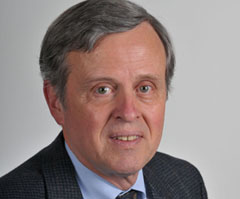
William Zumeta

Dr. William Zumeta joined the Evans School faculty at the University of Washington, Seattle in the fall of 1985. He served as associate dean from 2001-05 and acting dean from March-August in 1988. He previously taught at the University of British Columbia, University of California-Los Angeles, and the Claremont Graduate University. In addition to his faculty appointments, Zumeta is an Associated Scholar of the Program on Private Higher Education at the University at Albany (SUNY); Senior Fellow at the National Center for Public Policy and Higher Education; and a Fellow of the TIAA-CREF Institute.

Zumeta teaches in the areas of policy analysis and public policies toward education and higher education. His research interests focus on higher education and worker training policies and higher education finance and accountability. Outside of academia, Zumeta has been employed by or consulted with various private and nonprofit organizations, universities, and federal, state, and local government agencies. He holds a Ph.D. in public policy and a MPP from the Goldman School of Public Policy at the University of California, Berkeley as well as a BA in political science from Haverford College.

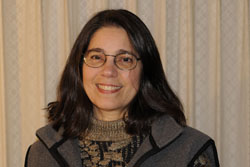
Angela Ginorio

Dr. Angela Ginorio is associate professor in Women Studies, and adjunct associate professor in the Departments of Psychology and American Ethnic Studies at the University of Washington-Seattle. She teaches courses on “Women and/Science,” “Issues for ethnic minorities and women in science and engineering” and “Women and Violence.”

She developed and directed the Rural Girls in Science Program that operated out of the University of Washington from 1992-2006. She just finished work as P.I. of the Sloan Foundation funded Interdisciplinary Social Science Approaches to the Participation of Ethnic Minorities in STEM. Her scholarship focuses on ethnic minorities and women in STEM, access issues in education for Latino/as and first-generation college students, and violence against women. She is a fellow of the American Psychological Association.

See more

Emory Morrison

Emory Morrison has been affiliated with CIRGE since the 2004 to 2005 academic year when he held an appointment as a Post Doctoral Fellow. Subsequent to this appointment, Emory has maintained his association with CIRGE as an affiliate faculty member while his primary appointment was with Mississippi State University as an Assistant Professor of Sociology. With CIRGE, Emory has specialized in analyses of PhD Career Path Tracking, especially the Social Sciences PhDs – Five Years Out Study which was developed and administered while Emory was in residence at CIRGE.

With CIRGE Emory collaborated on projects which lead to publications in the Review of Higher Education, Research in Higher Education, the Journal of Higher Education and the Journal of Marriage and the Family. He also contributed to a number of CIRGE reports.

Emory’s experience with CIRGE and his role in analyses of PhD career pathways has served as a foundation for later steps in his career: first to the National Science Foundation’s Center for Science and Engineering Statistics, and later to the Association of American Medical Colleges (AAMC) where he currently holds the position of Director of Policy Research Studies.

Elizabeth Rudd


Dr. Elizabeth  Rudd is a social science analyst in the Department of Housing and Urban Development’s Office of Policy Development and Research, Division of Program Evaluation.

Dr. Rudd is an experienced evaluator of innovative doctoral education programs funded by the U.S. National Science Foundation to promote interdisciplinary research. She is currently evaluating a new Ph.D. program that brings together lab scientists, ecologists, and engineers and builds the capacity of American Indian tribes to establish renewable energy systems.

As a postdoctoral fellow at the Center for the Ethnography of Everyday Life at the University of Michigan, Dr. Rudd studied maternity and family leave among women engineers and factory workers. Publications stemming from this work include Changing Landscapes of Work and Family in the American Middle Class: Reports from the Field (2008). Her essay “Family Leave: A Policy Concept Made in America,” in M. Pitt-Catsouphes and E. Kossek (Eds.) Work-Family Encyclopedia, is available online. See more 

Dr. Rudd’s Ph.D. thesis (U.C. Berkeley, 1999) investigated changing problems of work and family in former East Germany. It was based on qualitative fieldwork in Germany and in-depth interviews with more than 80 individuals. This work was published in Ethnos and Gender & Society.

Patricia Novick

Dr. Patricia Novick has been a corporate executive, consultant, trainer, and coach for more than three decades, specializing in the intersection between leadership and personal effectiveness. She was Director of Corporate Social Responsibility at McDonald’s and Executive Director of the Social Venture Network, an organization of CEOs of large, socially-conscious businesses.

She has advised leaders of organizations that include the Chicago Tribune, Westinghouse, the City of San Francisco, and Catholic Healthcare West. She founded and directed the first degree-granting program in holistic health in the United States. She has been a research and teaching fellow at institutions that include Harvard University, the Center for Urban Research and Leadership, and McCormick Theological Seminary.

Myan Baker

Dr. Myan Baker is a pioneer in the field of organizational evolution and specializes in supporting innovation by conceptualizing and implementing change-related systems strategies, models and processes that emphasize shifting mindsets and re-framing relationships. She has consulted to leaders of more than 400 organizations, networks and alliances, including private sector corporations and e-businesses, national and international collaborations, governments and related agencies, academic and research institutions, and a wide array of non-profit organizations.

She is noted for her capacity to focus on the future and to infuse organizational and leadership cultures with practical new ideas and creative methods.